The Ninth Sunday after Pentecost (Proper 15), August 10, 2025
July 7, 2025 | by Vince Brackett
| Reading 1 | Reading 2 | Reading 3 | Reading 4 | Reading 1 Alt | Reading 2 Alt |
|---|---|---|---|---|---|
| Genesis 15:1-6 | Psalm 33:12-22 | Hebrews 11:1-3, 8-16 | Luke 12:32-40 |
When I read Genesis 15:1-6, I think of Star Wars’ Luke Skywalker looking out at the planet Tatooine’s binary sunset as John Williams’ beautiful score surges. Luke feels the lure of ”a call to something more” as he looks toward the open sky — it’s a classic literary and cinematic trope. Is perhaps Abram’s look toward the open sky in Genesis 15:1-6 one of humanity’s earliest examples of that trope?
What is the choice before an individual when experiencing the lure of “a call to something more”? Genesis 15 suggests it is the choice of belief. (“Abram believed YHWH, and YHWH reckoned it to him as righteousness.”) This is not belief in the modern Western sense of propositional agreement, but in the ancient Hebrew sense of trust. (We still sometimes use the word “belief” this way when we speak of “believing in someone”.)
A process-relational lens helps us to see here the always-unfolding, never-predestined nature of our stories. This choice of Abram to believe (trust) God opens possibilities for God’s goodness, beauty, and justice to be realized in the next moment, but it does not guarantee anything about this story’s end. There must be continued belief (trust) in the next moment, and the next moment, and the next moment. We know that the rest of Abram’s story includes significant decisions marked by unbelief, with serious harmful consequences impacting others like Hagar and Ishmael.
We sometimes wish one choice could have the power to predestine the rest our lives — if I choose the right person to be in a relationship with I’ll feel complete, or if I make the right career choice or shrewd financial decision I’ll feel set for the rest of my life — but the best stories about “a call to something more” never hinge on such determinism. The best stories explore the ongoing interplay between destiny and openness as stories unfold.
Good pastors, like good storytellers, set people up for full lives of purpose and meaning when they refuse to perpetuate alluring but ultimately merciless claims about how this or that choice determines everything. Many of our congregants will know the dark side of the wish for one choice to have the power to predestine the rest of our lives: that, sometimes, one mistake or regret can feel like it will condemn us forever.
Good pastors represent the future as it genuinely is: open. That uncertainty need not overwhelm us, because the one presenting the possibilities for each next moment to us, God, is not without an aim, a lure, a call. Just because there is no certain, settled destiny doesn’t mean everything is left entirely up to chance!
Consider Hebrews 11’s famous interpretation of the Abram story as a story of faith — the assurance of things hoped for, the conviction of things not seen. This is quite a process-friendly Biblical passage. There is trust and resolve in the writer of Hebrews’ re-telling of Abram’s story, but there is no fortune telling or suggestion of pre-ordained knowledge — the celebration of faith here is about Abram’s belief in the midst of an open future, not a settled future.
The spatial metaphors at the end of this passage — (a) seeing and greeting promises from a distance, and (b) being a stranger in a foreign land seeking a better country — can, from a process perspective, also be powerfully re-fashioned as temporal metaphors: When I sense the God of possibilities calling to me about how the future could look, like a better country than the land of the past from which I have departed, that brings an energy and a consolation to my current moment, even though I am imagining that future from a distance, and it is still in flux.
Importantly, though, consider also Jesus’ images in today’s Gospel passage, Luke 12:32-40 — (a) needing to be dressed and ready with lamps lit, and (b) being ready so as not to let your house be broken into. These images represent the risks of our open future. Good pastors must also be mindful of the fact that while the open sky and the vastness of the stars can evoke wonder and imagination about a better future, they can also evoke fear and paralysis. The “call to something more” is not an invitation to a stroll in the park; it’s an invitation to the hard work of self-sacrificial love, of creating beauty from ashes, of fighting for justice against our world’s systemic powers and principalities. Responding to the call means facing pain, hardship, danger. No wonder Luke precedes these images with gentle, encouraging words: “Do not be afraid, little flock”.
As today’s selection from Psalm 33 reminds us, we may feel a weight beholding an open, sometimes promising, sometimes scary future, but, at the same time, “the Lord is beholding us”. We do not carry the weight alone. “Our soul waits for the Lord, he is our help and our shield. Indeed, our heart rejoices in him, for in his holy Name (reputation) we put our trust (belief). Let your loving-kindness, O Lord, be upon us, as we have put our trust (belief) in you.”
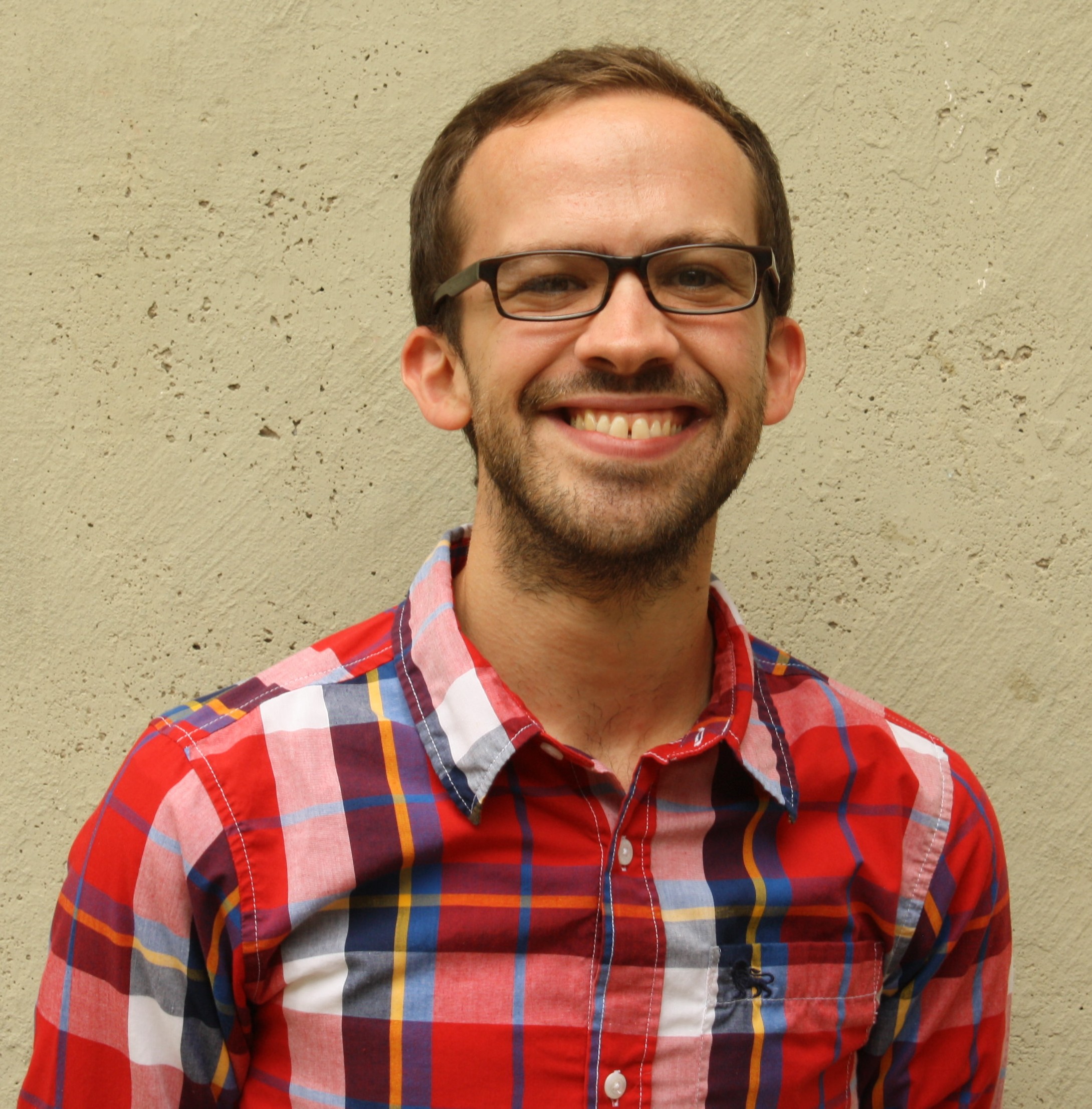 Vince Brackett pastors Brown Line Church, a progressive Christian community with a healthy sense of humor and humility, named for Chicago’s Northside “L” train. His background is in education and he is especially interested in the intersection of theology and sociology. Things that bring him joy include: playing guitar and singing with his wife, following the NBA and English Premier League, diving deep into “hero’s journey” stories, and working with audio/visual technology. He and his wife (and their four kids) have enjoyed living communally with housemates for the last 12 years.