Buddhist Process Explorations
A Discussion Group About the Exploring, Sharing,
and Practice of Buddhist Process-Relational Thought
| WHAT? | Learning Circle |
| WHEN? | Monthly on the third Wednesday at 5:00 PM Pacific / 8:00 PM Eastern Special series on Dōgen and Whitehead will run Sep 2026 – Feb 2027 |
| WHERE? | Online Via Zoom |
Special Series
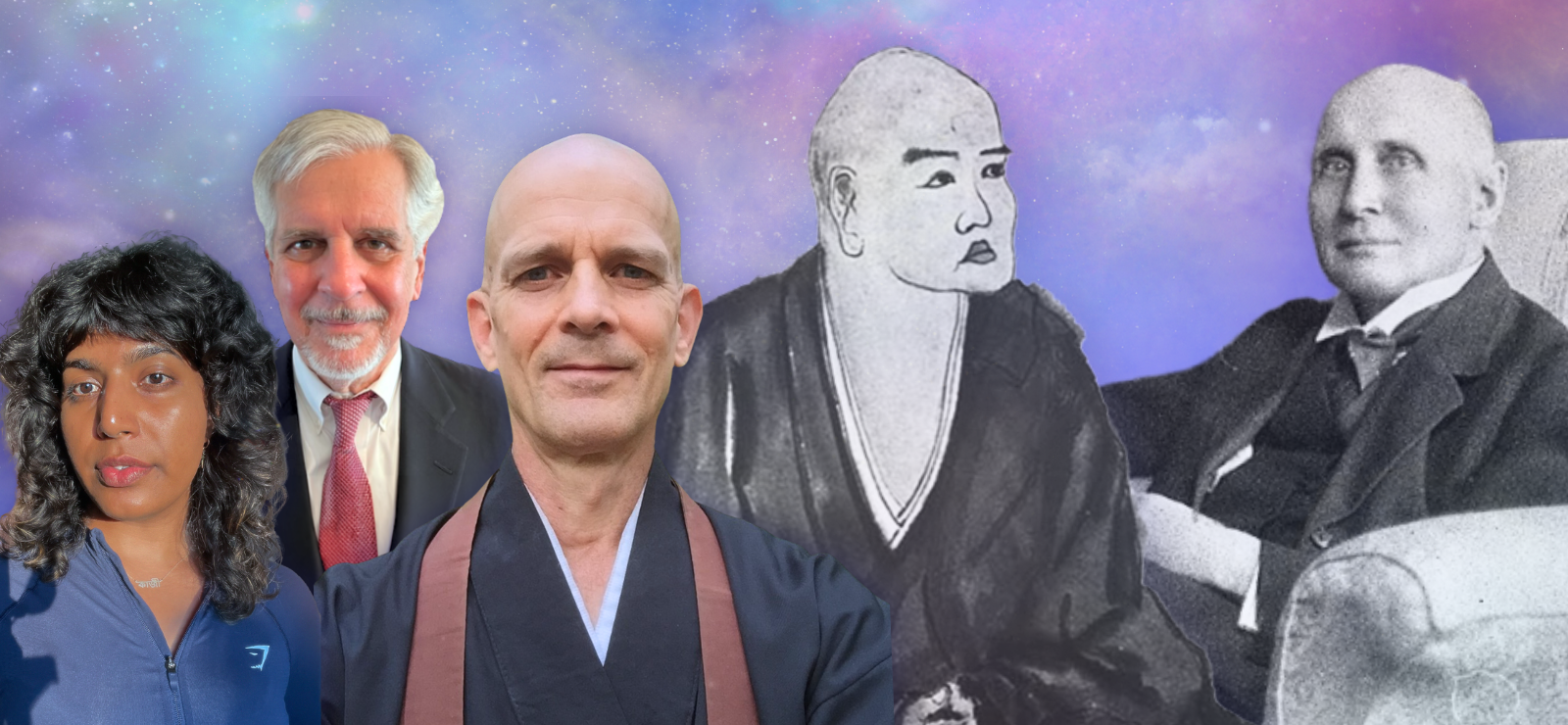
A Six-Session Conversation on Zen and Process Philosophy
Today, many spiritual seekers are drawn to the writings of the thirteenth-century Zen master Dōgen. Rooted in the Sōtō Zen tradition, Dōgen’s reflections on time, awakening, body and mind, compassion, nature, and everyday practice inspire readers across religious and philosophical traditions. They are especially drawn to his emphasis on zazen, or Zen meditation, as an anchor for awakening in everyday life and for living in the world with wisdom and compassion.
Many seekers are also drawn to the process philosophy of Alfred North Whitehead. His philosophy offers a vision of lived experience as consisting of moments in which the many of the universe become one in the immediacy of experience itself; an understanding that all moments are “present in” others even as they remain discrete; and a portrayal of the universe as a vast network of interdependent becomings, each possessing value and worthy of respect and care. These seekers sense that there is something “Buddhist” about Whitehead’s thought and perhaps also something “Whiteheadian” about Dōgen’s Zen.
This series brings these two visions into conversation. Using The Essential Dōgen, edited by Kazuaki Tanahashi and Peter Levitt, each of the six online sessions will feature a selected passage from the book, a Whiteheadian commentary by Jay McDaniel, a response from Sōtō Zen priest Shōryū Bradley, and open discussion among all participants.
Series Outline
Session One: Practice and Awakening (Sep 16)
Dōgen challenges the idea that spiritual practice is merely a means to a future goal. We will explore his understanding of “practice-realization,” in which practice is itself an expression of awakening, and compare it with Whitehead’s understanding of each moment as an act of creative becoming.
Session Two: Being-Time and the Creative Advance (Oct 21)
For Dōgen, beings do not simply exist within time: existence itself is time. We will place his teaching of uji, or “being-time,” in conversation with Whitehead’s account of temporal experience, perpetual perishing, and the creative advance into novelty.
Session Three: Body-Mind and Lived Experience (Nov 18)
Dōgen’s Zen is embodied: awakening involves the whole person rather than an isolated mind or soul. This session will explore body-mind, zazen, and lived experience alongside Whitehead’s rejection of mind-body dualism and his understanding of experience as embodied, relational, and affective.
Session Four: Mountains, Waters, and the More-Than-Human World (Dec 16)
Dōgen writes of mountains walking, waters speaking, and the natural world expressing the Dharma. We will consider his vision of nature in relation to Whitehead’s philosophy of organism, asking what both thinkers might contribute to ecological awareness, kinship with other living beings, and respect for the more-than-human world.
Session Five: Compassion, Interdependence, and the Bodhisattva Way (Jan 20)
Dōgen presents compassion not simply as a private feeling but as a way of living with and for others. We will explore his teachings on the bodhisattva way, generosity, kind speech, and beneficial action in conversation with Whiteheadian ideas of relational selfhood, mutual immanence, and care for the well-being of the world.
Session Six: Everyday Life and the Way (Feb 17)
For Dōgen, awakening is expressed in ordinary activities: eating, cooking, cleaning, working, sitting, and caring for others. Our final session will explore the spirituality of everyday life, bringing Dōgen’s teachings into conversation with Whitehead’s conviction that immediate experience—in all its ordinary richness—is the starting point of philosophy and a setting for creative transformation.
About the Series Facilitators
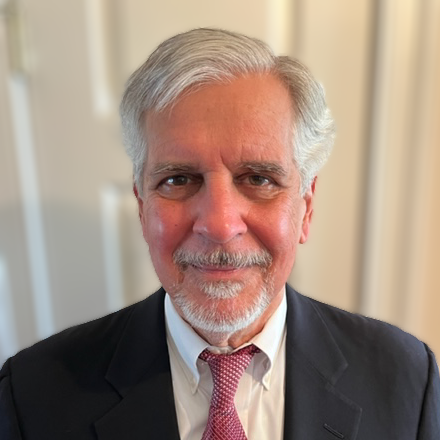
Jay McDaniel is a philosopher and theologian known for his work in process theology and open and relational thought. Influenced by Alfred North Whitehead, his writing explores the relational nature of reality, the role of creativity in the universe, and the spiritual significance of everyday life. He has long been associated with the Center for Process Studies and with Open Horizons, where he helps develop resources that connect philosophy, spirituality, ecology, and the arts. McDaniel writes for both academic and general audiences, often drawing on literature, music, theater, and nature to illuminate philosophical ideas. His work emphasizes compassion, imaginative freedom, and the possibility of cooperative and sustainable communities. A teacher, essayist, and musician, he is especially interested in how process philosophy can enrich religious life, interfaith dialogue, and public culture. Through essays, courses, and collaborative projects, he seeks to make complex philosophical ideas accessible and practically meaningful for contemporary life.
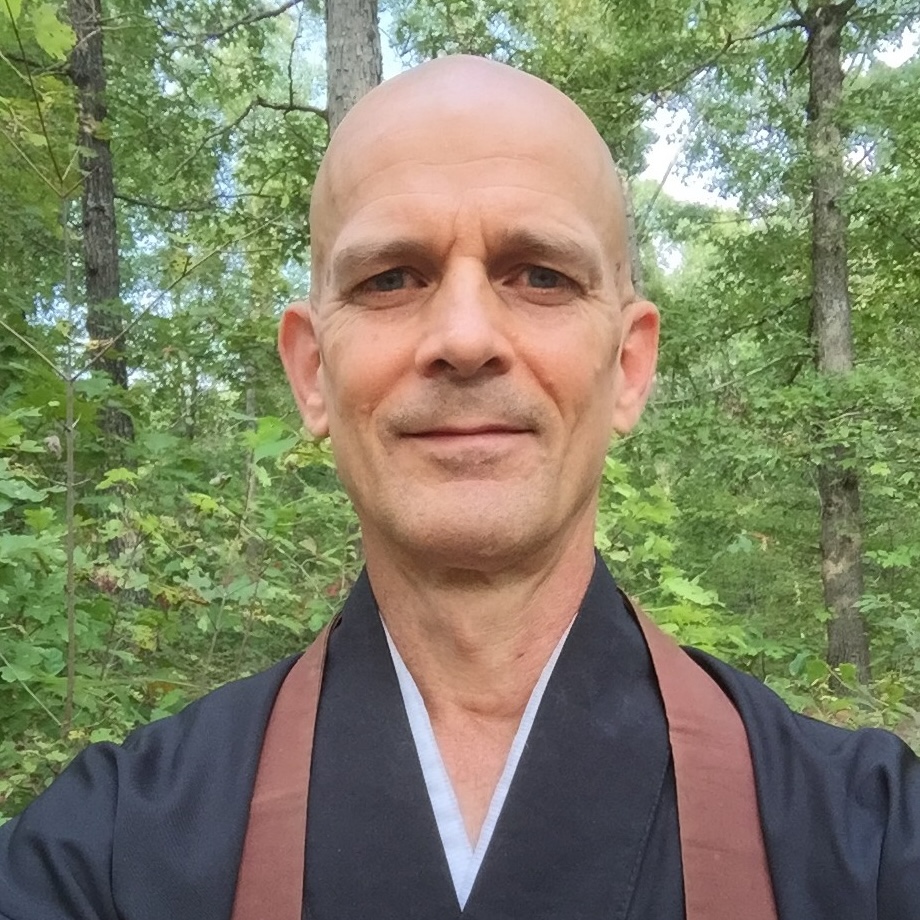
Shōryū Bradley was ordained as a Sōtō Zen priest in 2002 by Seirin Barbara Kohn at Austin Zen Center. In 2004 he moved to Bloomington, IN to study with Shohaku Okumura Rōshi and Sanshin Zen Community. He also trained extensively at Tassajara Zen Mountain Center, studying with teachers such as Tenshin Reb Anderson Rōshi and Zenkei Blanche Hartman Rōshi. Shōryū also participated in Sōtō Zen International Training periods held in the US and Japan, and in 2010 he became a lineage holder in the Sōtō Zen tradition, receiving Dharma transmission from Okumura Rōshi. He holds a BS in psychology from Texas A&M University, an MEd in Rehabilitation Counseling from the University of Texas at Austin, and he has been teaching and practicing at Gyobutsuji Zen Temple in Northwest Arkansas since founding it in December 2011.
About Buddhist Process Explorations
At face value, the Buddha’s Dharma and Whitehead’s Process Philosophy seem to characterize reality in very different ways, and for different reasons. The Buddha taught that reality as we typically experience it is an impermanent, selfless and dissatisfying process of cyclic becoming continuously powered by compulsive attachment and aversion grounded in delusion. The Buddha prescribed various methods we could deploy in order to go beyond this painful and immiserated condition, methods which involve thorough analysis and deconstruction of our habituated and self-limiting assumptions about ourselves and the world as well as means of cultivating more purified states of awareness and embodiment so that we can awaken to the way things really are and unleash our core potential.
Whitehead elaborated a systematic philosophical scheme, replete with foundational metaphysical categories, that reconstructs reality as a cumulative process of concrescence whereby many diverse feelings creatively synthesize into a novel experience, aiming towards satisfaction and lured to completion through divine persuasion. For Whitehead, many of the issues in philosophy and society at large could be traced to various fallacious conceptions concerning nature, language, and experience which he sought to rectify with his panexperiential, process-relational Philosophy of Organism.
“In the inescapable flux, there is something that abides;
in the overwhelming permanence, there is an element that escapes into flux….
Those who would disjoin the two elements can find no interpretation of patent facts.”
–A.N. Whitehead, Process and Reality, 5.1.2.
In spite of their differences, both traditions characterize reality as an unceasing process of becoming devoid of independent, self-sufficient, and static entities, and both traditions give great emphasis to aesthesis or direct, unmediated experience as the beginning and end of all analysis and speculation. Concomitantly each tradition has also been ethically oriented to openness and interdependence, putting great value on both the self-creative individual’s own perspective on the world as well as their relational embeddedness in and inextricability from a grand social matrix stretching throughout history and the cosmos. For these reasons there have been a lot of conversation and dialogue between the two in the last few decades, and only recently have we begun seeing a genuine movement towards mutually receptive openness and creative synthesis.
This discussion group will explore, and ideally instantiate in actual practice, the possibility and reality of Process Buddhism(s), which can only be enunciated in the plural due to the diversity of perspectives found in each tradition undoubtedly resulting in a diversity of syntheses, even while all sharing the same name designating a common basis in both traditions. Some readings from key texts in the traditions will provide soft launching pads for discussion, dialectic and dialogue with a special emphasis placed on the practical (i.e. ethical, socio-political, ecological and soteriological) import of such an endeavor. The topics of discussion in each meeting will organically develop as part of a cumulative advance on prior discussions, all the while consistently maintaining an openness and simplicity that allows room for people of any level of experience to learn and to participate.
“To say ‘it is’ is to grasp for permanence.
To say ‘it is not’ is to adopt the view of nihilism.
Therefore a wise person does not say ‘exists’ or ‘does not exist.’”
–Nāgārjuna, Mūlamadhyamakakārikā, 15:10
About the Facilitator

Kazi Adi Shakti is an artist and independent researcher studying and theorizing on the intersections of Process Philosophy, Madhyamaka Buddhism, Western Marxism and Ecofeminism, with a special focus on the unique role each might play in a holistic soteriology that includes them all. Kazi blogs regularly on her site, holo-poiesis.com.